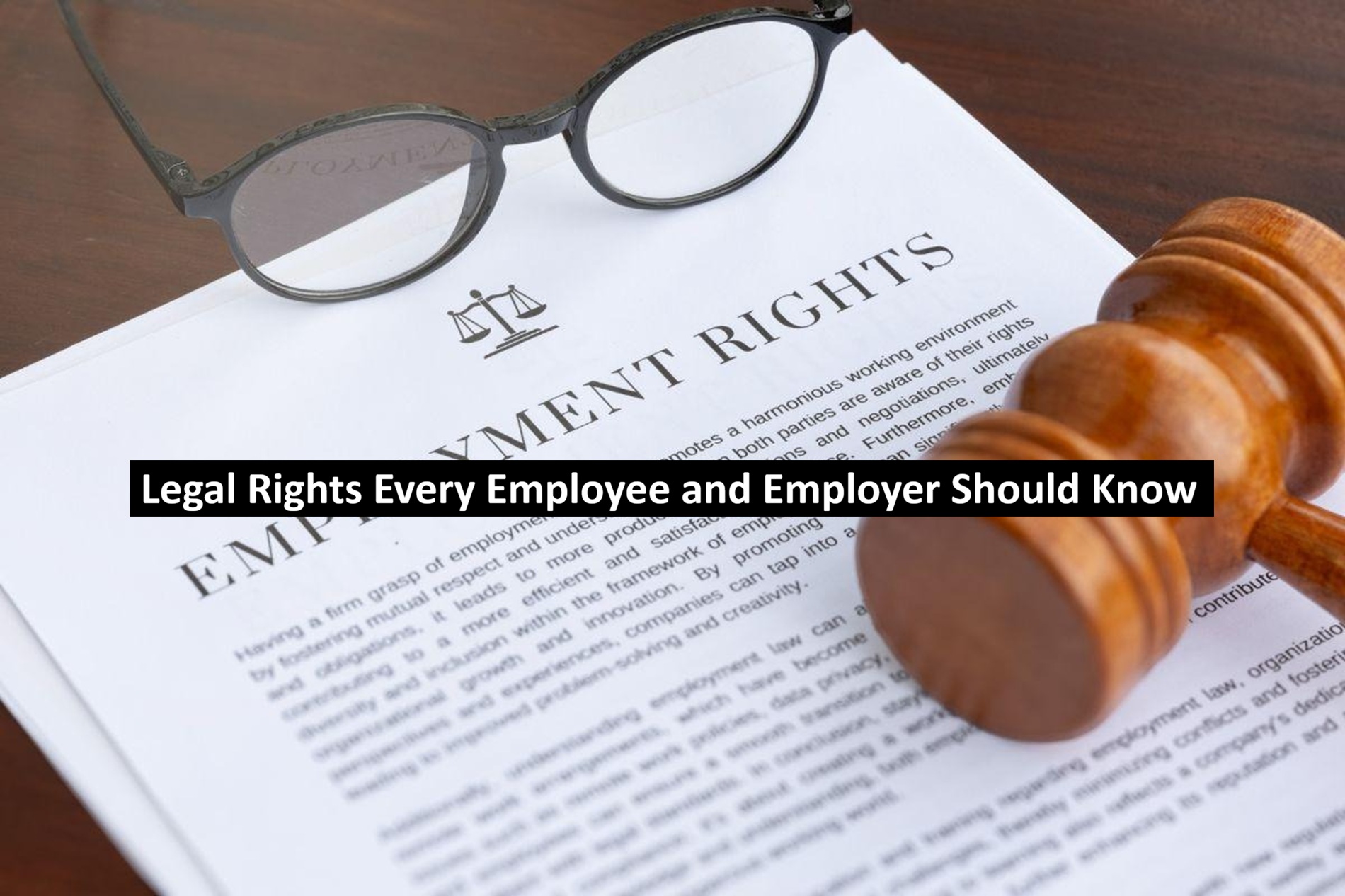
It’s not all about working hard and professional attributes in the workplace. Employees and employers have a set of rights and duties, which determine how each individual is treated, rewarded, managed and secured within the workforce. A basic knowledge of employment rights should help avoid confusion and promote clarity and better working relations.
It is important to remember employment law can vary enormously by country, by state, by industry and by the terms and nature of the employment. There are some general principles, however, such as having a workplace safe, providing the right payments, being clear about the agreement and receiving fair treatment which occur in all employment law regimes. In addition, learning to understand when to get expert assistance is also crucial in complex workplace scenarios.
Understanding Employment Contracts
An employment contract lays out certain significant conditions between an employer and an employee which may include, scope of role, remuneration and pay, hours of work, benefits, holiday allowance, and notice. In understanding these terms beforehand, bothparties can avoid future conflict.
It’s important for employers to provide contract provisions that are sufficiently clear about workplace expectations and to refrain from including anything which goes against employment laws which are applicable. Keeping a copy of the employment contract, any changes made to it, or other vital documents, would serve an employee well for reference.
Read: How Can a Criminal Lawyer Challenge False Witness Statements?
Right to Fair Compensation
Your workforce has access to, or, it can learn their legal rights and contractual terms which relate to compensation including overtime and deductions, bonus structures and other terms of employment. As an employer, there’s need to for accurate payroll practices and comprehensive record-keeping, to confirm you’re providing every worker their dues.
Transparency regarding salary and when the payment will be issued can clear confusion and builds trust. In addition, companies must stay abreast of applicable minimum wage requirements, overtime regulations and other laws in your jurisdiction as these regulations vary significantly by state or territory.
Protection Against Workplace Discrimination
Promoting equitable treatment Creating a workplace in which individuals are treated with due regard is part of an organization’s overall ethical and responsible employment practice. Under the governing law, staff may be legally protected from discrimination based on a protected attribute like gender, race, age, disability, religion, for example. Organizations need to implement employment practices in workplace, which offer equality of opportunity, and that the same decision-making processes are consistently followed.
Workers who think they have faced illegal discrimination ought to remember appropriate occasions and utilize established reporting processes. Employers must give consideration to reports and investigate them on fair basis, also keeping appropriate records.
Workplace Harassment and Employee Protection
Whether employees work from home or the office, harassment and discrimination can have a severe effect on employee health and the quality of working life in an organization. The organization will have a defined policy on how it does not want its people behave towards others at work, the communication channels available to express any form of discrimination shall be communicated to all employees; the management should be trained onhow to approach an issue raised and how to react.
Staff members ought to become comfortable with procedures of the workplace as well as reporting processes. It may be useful to keep accurate records if official action is necessitated.
Health and Safety at Work
Ensuring that a place of employment is reasonably safe to be on is indeed a significant, if not mandated, requirement of any employer and the company or business they run. To achieve this, organizations must first pinpoint potential risks; thereafter, they must implement and maintain processes which focus on educating their workforce and providing it with essential equipment maintenance as it goes. This approach reduces any accidents that may occur from being purely a matter of bad luck or coincidence.
Workers, too, bear some responsibility for keeping a safe working environment. Observing proper procedures, utilizing the appropriate safety devices, and reporting safety hazards will help keep everyone safe at work.
Privacy in the Workplace
Now workplace privacy issues, which became more complicated with modern technology – and the availability for example of email monitoring, surveillance cameras, access controls, productivity monitoring etc. By employers, though these can also be affected by privacy/data-protection, surveillance or other legislation.
Dissemination of Policies The company should ensure applicable policies pertaining to monitoring are easily accessible, understood by all employees, and that company property, accounts, and communication devices are used within the privacy expectation employees can have to utilize said company property, accounts and communication devices.
Leave and Time-Off Rights
Depending on local statutes and individual employment contracts or company rules, workers can claim various sorts of leave, such as sick leave and vacation pay, paternal and child leave and also other specified times. Different legal territories often pay at differing levels and let for varied quantity of paid absence from service.
Employer’s policies on leave need to be clear and consistently followed by everyone. Employees must know when and how to apply for leave and submit the necessary documents.
Termination and Resignation Rights
The termination of a work relationship has potential implications of law for both employer and employee and, depending on what led to it and on what territory there will be some need to take into account such factors as: notice period, final payslip and balances of wages, benefits or leave to be paid out, any settlement or severance package, work certificates, and legal safeguard as to protection against a firing made without a just and lawful cause.
Employers would stick to the correct process if an individual was being dismissed and keep adequate written evidence for significant actions. If anyone is considering their employment they must look at there existing contractual and office policies for their relevant duties.
Resolving Workplace Disputes
Not all workplace conflicts need immediately end in litigation. Many can be resolved via direct communication, internal grievance procedures, with the human resources department, or through various methods of alternative dispute resolution such as mediation. Handling complaints in their earlier stages can prevent the escalation of minor conflicts.
Nevertheless, for serious matters such as discrimination, harassment, non-payment of wages, safety violations, retaliation, or even wrongful discharge, you should seek guidance from employment law counsel or the relevant government agency.
Not all workplace conflicts need to be turned over for an investigation or a formal legal claim. Several conflicts can be worked out among employees through direct, amicable conversations, an internal grievance, HR complaints, Mediation or another conflict resolution option. Unfortunately, where there is a complex or severe claim and questionable evidence, understanding how a criminal lawyer can challenge false witness statements may provide Helpful glimpse into the legal system and the significance of presenting trustworthy evidence. Resolving issues early on and providing proper documentation can avoid unnecessary issues.
Building a Fair and Responsible Workplace
Knowing your workplace rights are to the advantage of employers and their staff. By learning and understanding these laws staff are empowered to take the actions they need to. Furthermore, and a positive side effect, employees who know their rights will contribute to the creation of a more equitable work place thus lessening the legal risks faced by the business. Policies put in place consistently along with the corresponding records is often the beginning to a healthy relationship in the workplace.
Laws and guidelines affecting employees alter as circumstances and individual state conditions change. General material of this sort should never be regarded a substitute for a precise analysis of specific questions by the related legal expert. When both employers and workers are enlightened on the law that governs their unique context, they are more effective in their capacities and to avert disagreements in the workforce and create jobs sites that fosters fairness, safety as well as the regard for the rights of each other.
Author’s Bio:
Lalit is a freelance content writer, blogger, and digital marketer with 6 years of experience. He writes clear, engaging content on law enforcement software market, SEO, technology, business, education, and market trends, making complex topics easy to understand and apply.